
Whence come the highest mountains? so did I once ask. Then did I learn that they come out of the sea.
That testimony is inscribed on their stones, and on the walls of their summits. Out of the deepest depths must the highest come to its height.
Thus Spoke Zarathustra, Frederick Nietzsche
~ ~ ~
A Beginning
When I was a teenager, I worked in my father’s automotive machine shop, rebuilding engines during the summer and after classes in high school. I learned the mechanics of the engine, but I found the precision and systematic work suited my personality. At the same time, I had a strong connection to nature, going on many camping, canoeing and hunting adventures with close friends in Boy Scouts.
My family lived in the country along the edge of a conservation area, so I often walked with my dog and went fishing along the shores of the Grand River. In high school, science and math came easily to me, but I was also interested in visual art, drawing, and photography.
My father had scientific training, having studied metallurgy at graduate school. While I was growing up, he maintained his interest in science with a regular subscription to Discover Magazine. I looked through several issues. I remember the issue about chaos, and string theory, and would have certainly been captivated by the March issue of 1987, “What Were Dinosaurs Really Like?” that featured a Hadrosaur feeding its young hatchlings.
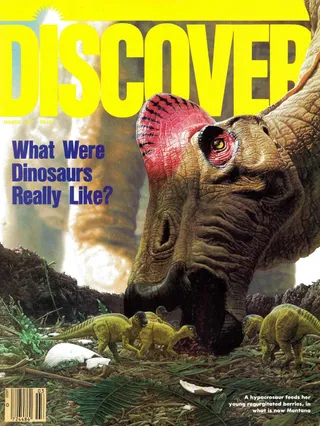
For me, in that time before the first Jurassic Park movie, I would have been captivated about dinosaurs as ancient living animals. They cared for their young, traveled in large herds and communicated complex information among the social groups. As I observed nature that surrounded me in my youth, I understood we were all just a small part of a very ancient planet.
How could I have known, that ten years later I would be exposing the bones of one of these ancient Maiasaura dinosaurs and its young hatchling. But first, I had to learn about how mountains formed, and to help find reptiles that once swam in ancient oceans.
Williston Lake
After high school, I attended University of Guelph, studied visual art, pursuing sculpture, photography, drawing, and explored the importance of visual media for transmitting information. I also explored the history and philosophy of science, ethics and the environment, and a few science classes, including chemistry.
At the end of my second year, I had the opportunity to volunteer on a fossil expedition at Williston Lake in British Columbia, organized by the Royal Ontario Museum. A family friend, who had also studied visual art at the University of Guelph, worked at the museum and was involved in organizing the expedition. With my knowledge of the outdoors, visual art training and my ability to fix mechanical equipment, he offered to add me to the list of potential student volunteers. Being selected with two other student volunteers from University of Toronto was a life changing opportunity.
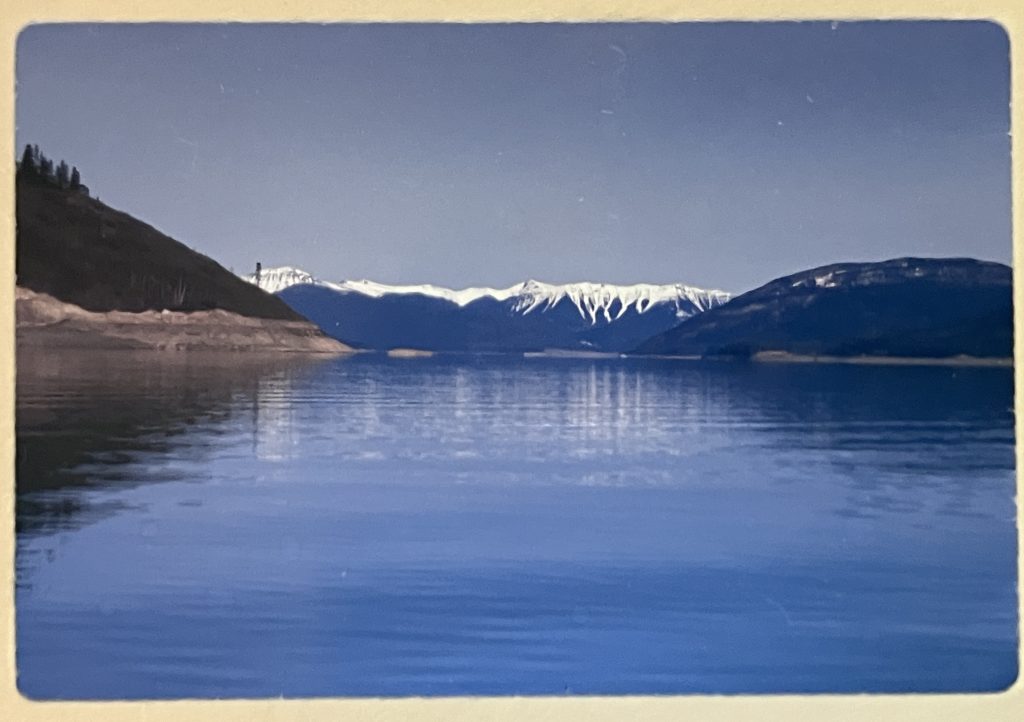
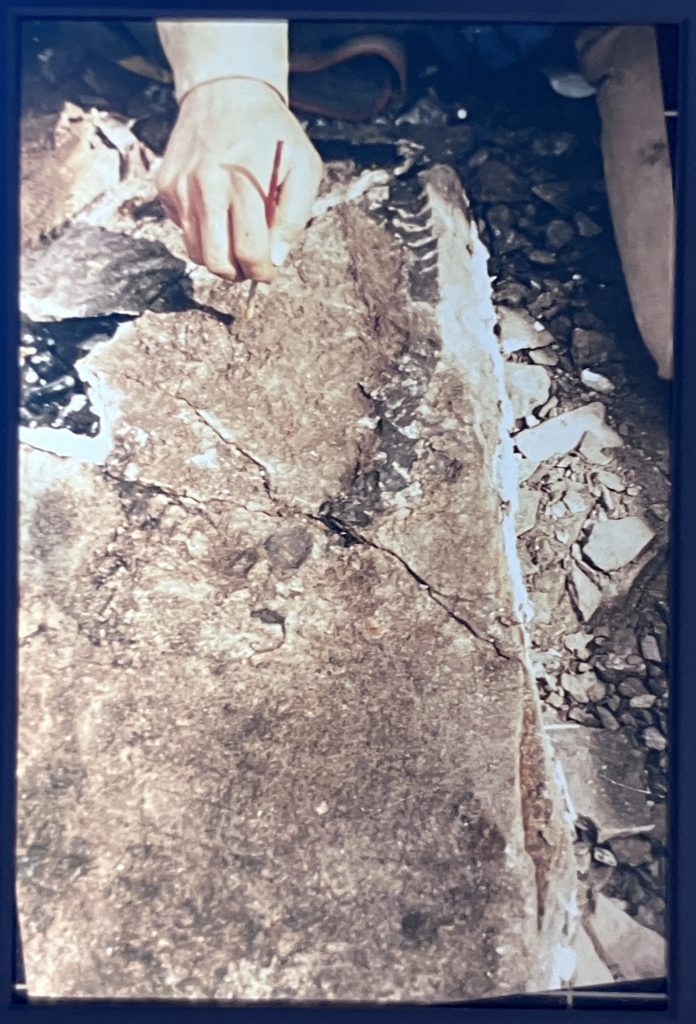
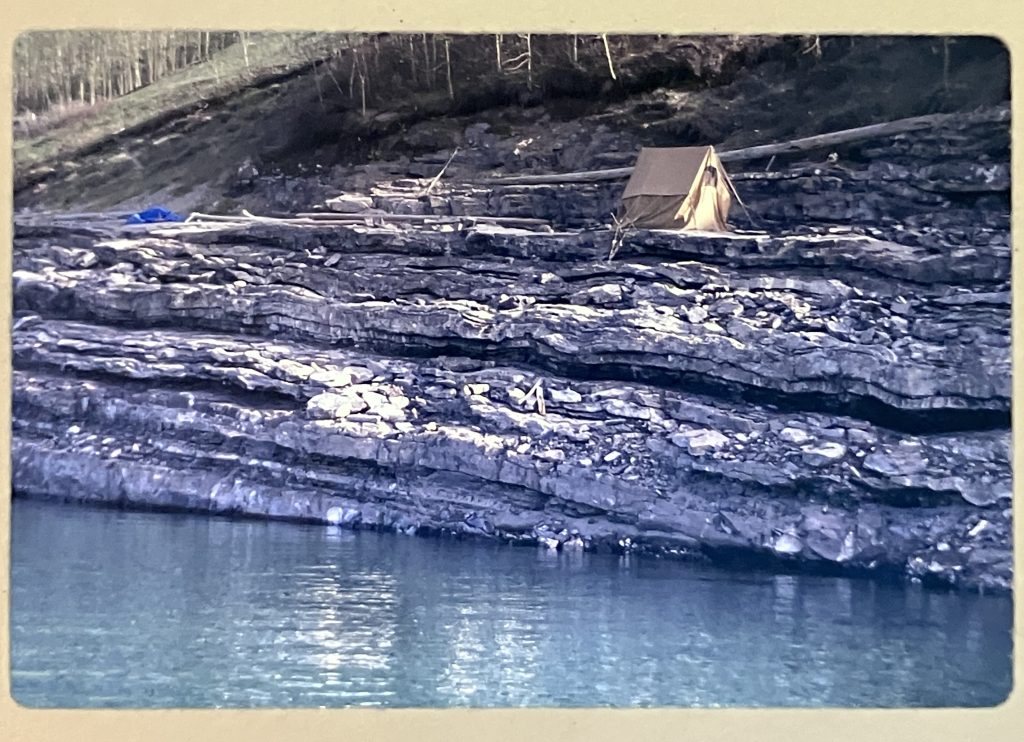
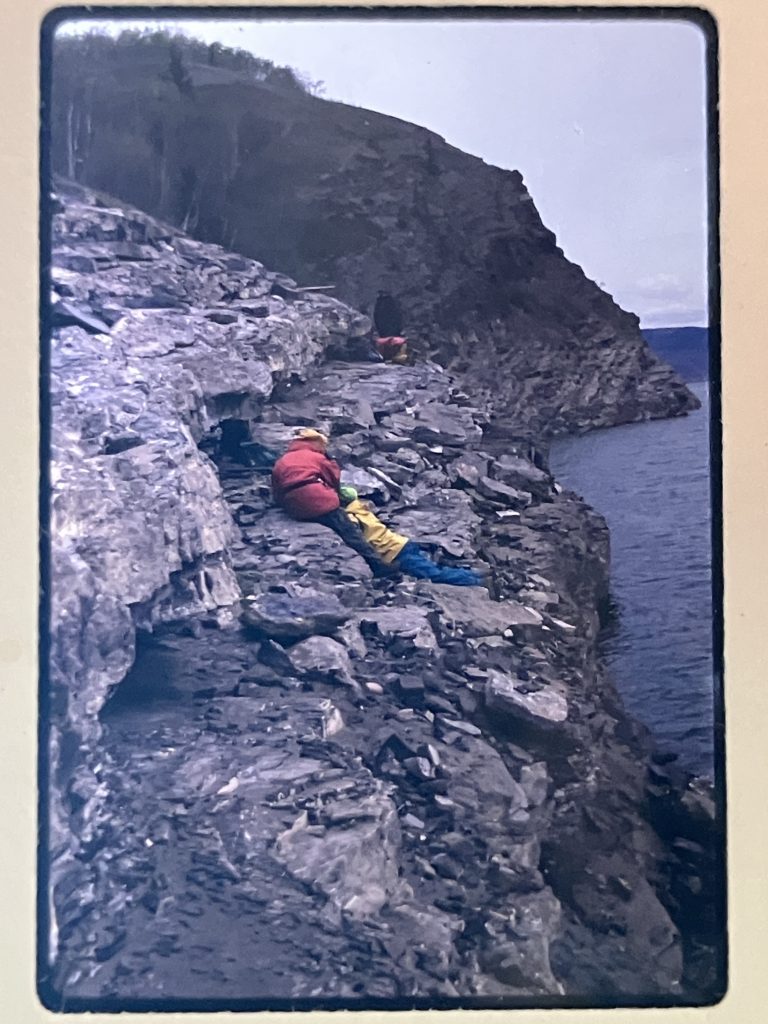
In the foothills of the Rocky Mountains, our crew of museum curators, technicians and volunteer students, worked for several weeks to find and collect the 210 million year old bones of Ichthyosaurs, marine reptiles that swam in ancient oceans of the Triassic. My visual art training helped me to “see” and distinguish the fossil bones from similar looking mineral chert. From sculpture, I knew how to carve stone, visualize into the rock outcrop, and create supportive jackets plaster and burlap.
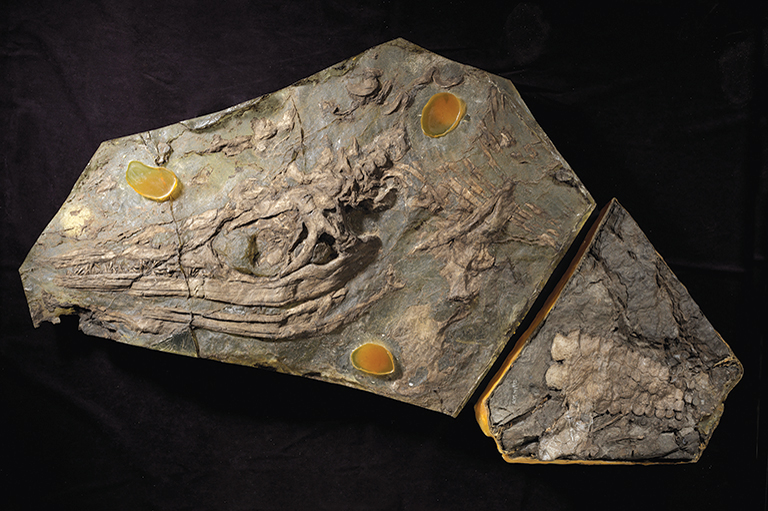
The ROM expeditions to Williston Lake were organized to support the research of Dr. Chris McGowan, a world expert on the Ichthyosaur marine reptiles. When I was a member of the expeditions to Williston Lake, there were many articulated specimens found and several important specimens collected. Ichthyosaurs are interesting for many reasons, terrestrial animals that evolved back to marine life, legs evolving into flippers, and marine reptiles that gave live birth. I would have the opportunity to explore the evolution of the Ichthyosaur flipper ten years after these expeditions, while working on my PhD in Nova Scotia.
From my participation in these ROM expeditions, I appreciated more fully that rocks and strata were more than just static and hard materials. These rocks along the shores of Williston Lake were once the bottom of an ocean, today an archive of the ancient past, lifted into the mountains by powerful geological processes. These rocks were 210 million year old ocean sediments and animal remains.
…. this writing is ongoing, check in again in the future to read more.

Leave a Reply