The following panels are sketches beginning to explore options for creating graphic narratives. Let us know what you think by leaving a comment below. Enjoy.
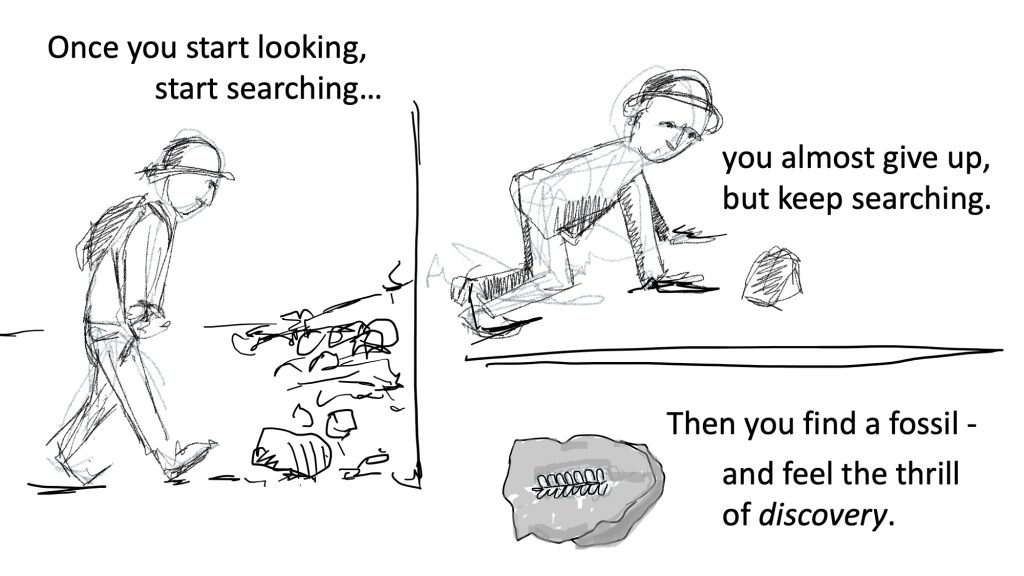
Some cautions for those who are searching. The thrill of discovery might happen only after a great effort. The reward that you feel may inspire you to continue, and search for more. Be careful to not loose perspective and get distracted by a variable reward and a sunk-cost fallacy. Take time to observe and appreciate your effort and results.
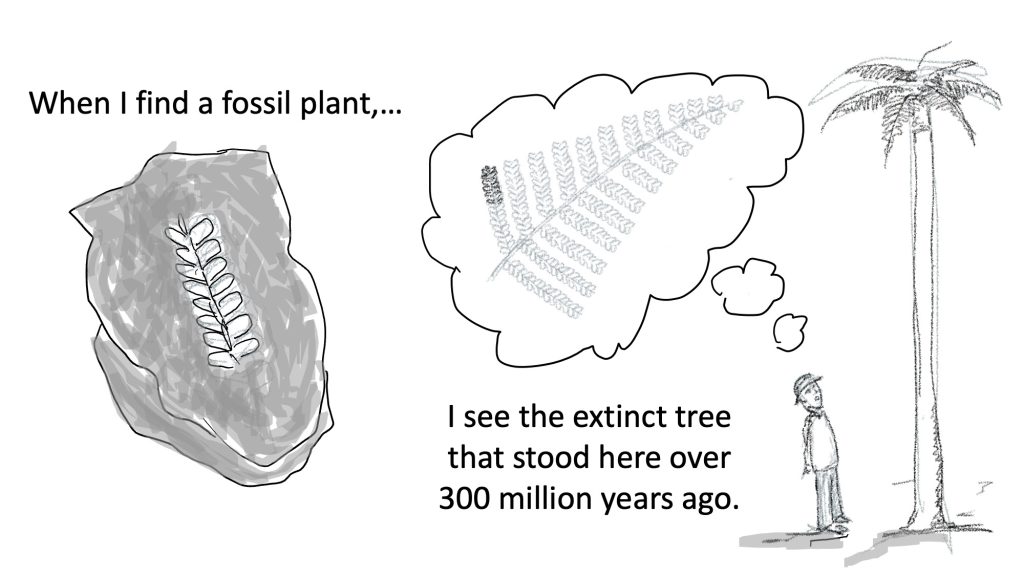
A palaeontologist sees a fossil but uses their imagination to see the ancient plant or animal. It is only through our study of modern plants and animals that we can reconstruct and imagine what the partial fragments of fossils represent. Like detectives, palaeontologists see fragments of information, use these clues, to understand the ancient past. In this way, we time travel.
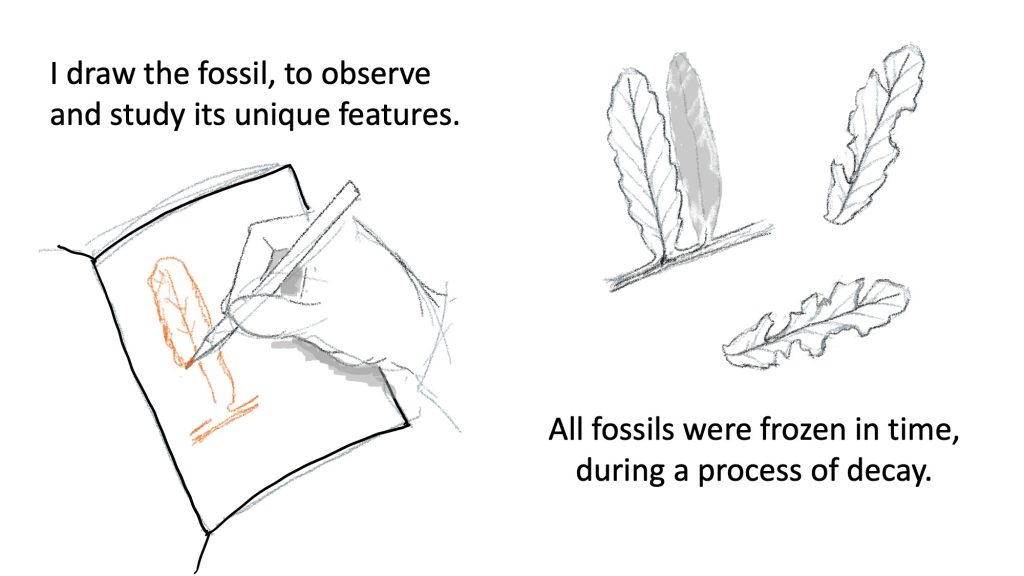
The vast majority of plants and animals in the ancient past have decayed. Palaeontologists study the very rare occasions when portions of the ancient plants and animals are frozen in time, the decay stopped and turned to stone. We study fossils that exhibit different stages of decay – but no fossil is a perfect representation of the ancient animal or plant.
Drawing helps us see the important details and to share them with others. These are some of the stories of Sketchy Fossils.
Leave a Reply