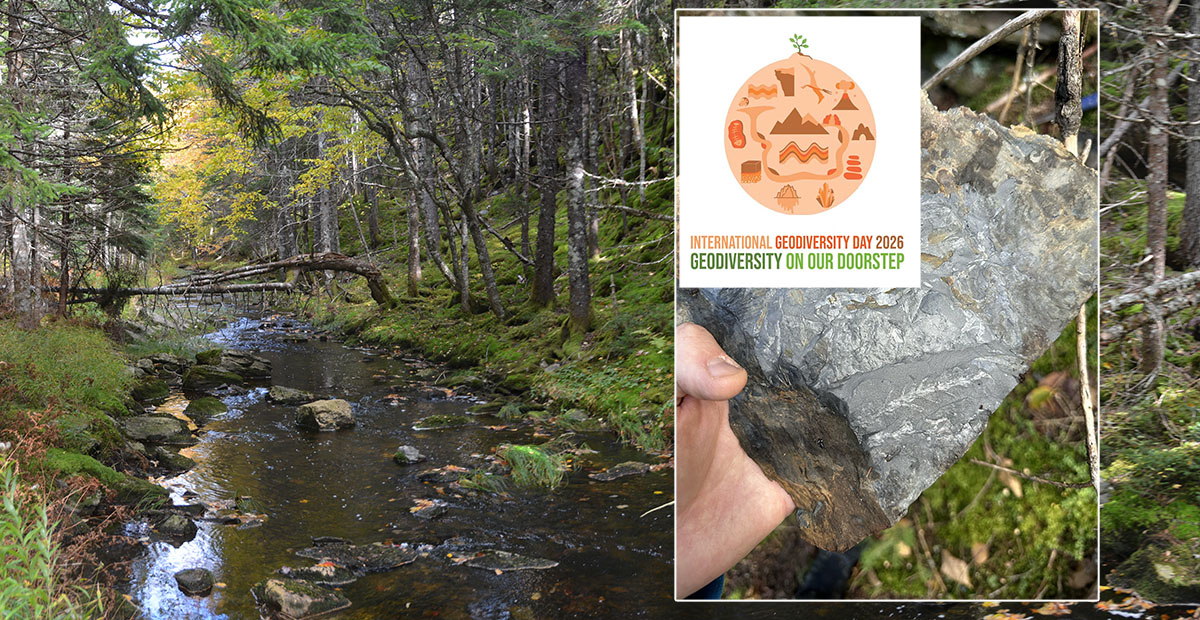
The theme for this year’s International Geodiversity Day is Geodiversity On Our Doorstep.
Last year, we visited several coastal sites in the Cliffs of Fundy Geopark from sunrise to sunset, but this year we celebrated with a field trip to an important fossil site in the highlands of the Cliffs of Fundy UNESCO Global Geopark. Our goal was to examine the site where the oldest fossil plants are found in Nova Scotia, 400 million year old plants from the Emsian stage of the Devonian.
Devonian Plants
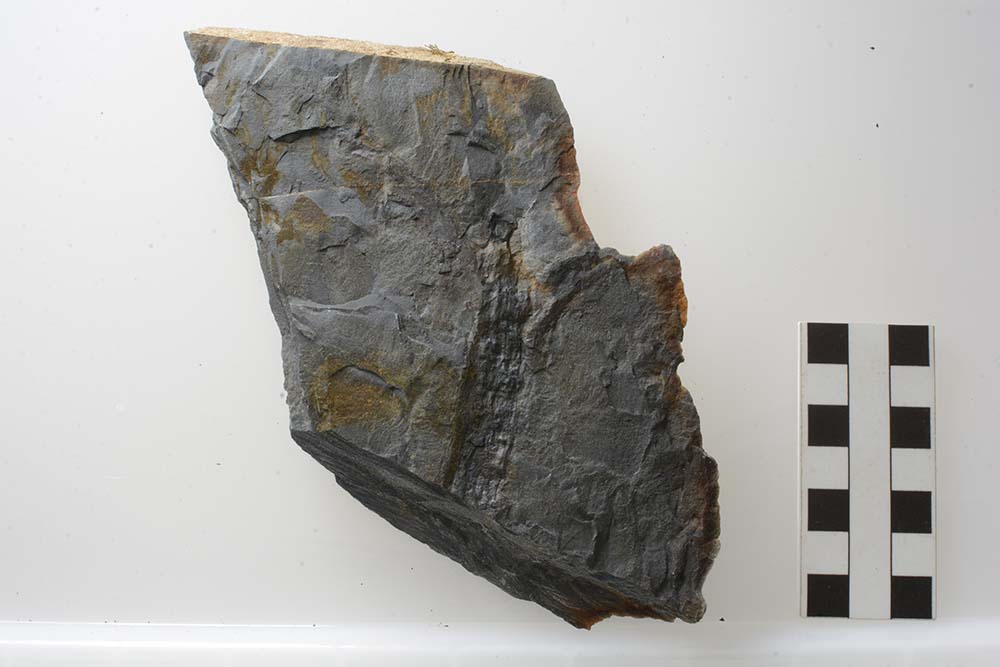
The inspiration for this year’s field trip started at the Nova Scotia Museum where I had spent a few days examining some fossil plants collected thirty years ago. The fossils had not yet been accessioned into the collection (numbered and catalogued), so while preparing the required background information I learned more about when and where they were found.
But this story starts even earlier, in the 1850s when William Dawson began to study fossil plants along the coast of New Brunswick.
Geoheritage
(John) William Dawson, was an important historical geologist in Nova Scotia. After meeting Charles Lyell during his trip to Nova Scotia in 1842, Dawson pursued his passion of geology with zealous effort and dedication and published his monumental book, Acadian Geology, in 1855. Then, in 1859 William Dawson published his study of Devonian aged plants from New Brunswick and named the new fossil plant, Psilophyton princips.
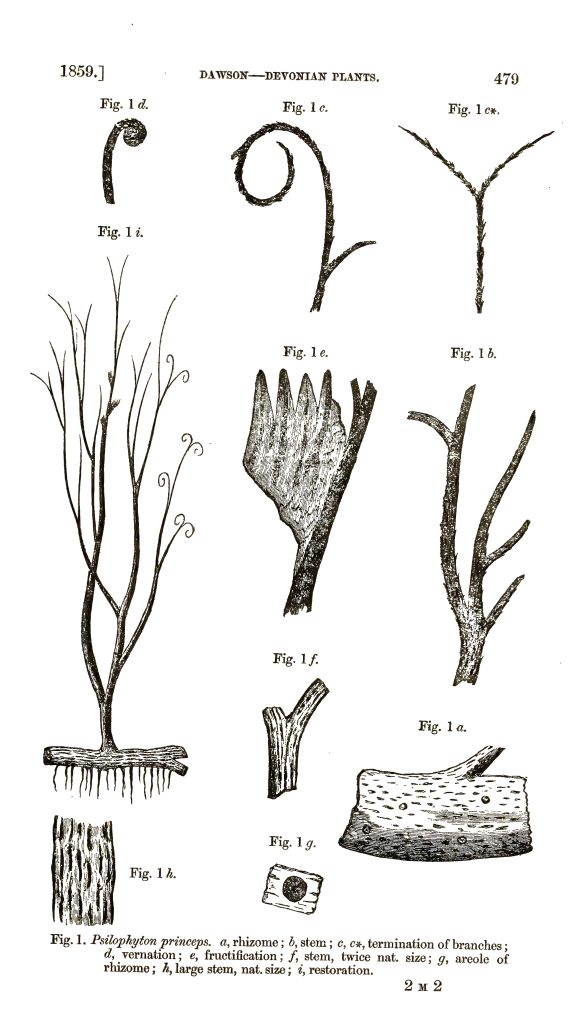
Today, we now recognize Psilophyton as the iconic plant of the Emsian stage of the Devonian Period, from about 410 to 393 million years ago. Psilophyton, and the other plants of this early period were small (max 50 cm tall) simple branching structures that did not have true leaves. Photosynthesis occurred on the stems of these ancient plants.
Back to the Future
About two weeks ago, I completed the photography of the plant fossils collected for the museum in 1997. A geologist with the Nova Scotia Department of Mines and Energy (now Natural Resources), Peter Wallace, found the fossil site in 1977, when he and Howard Donahoe were completing a geological survey of the Cobequid Highlands. Now, fifty years after its original discovery, the time has come to revisit the fossil site.
This year, Caleb Grant (Geoscientist with the Cliffs of Fundy UNESCO Global Geopark) and I decided we would try to visit the fossil site for International Geodiversity Day.
A Babbling Brook
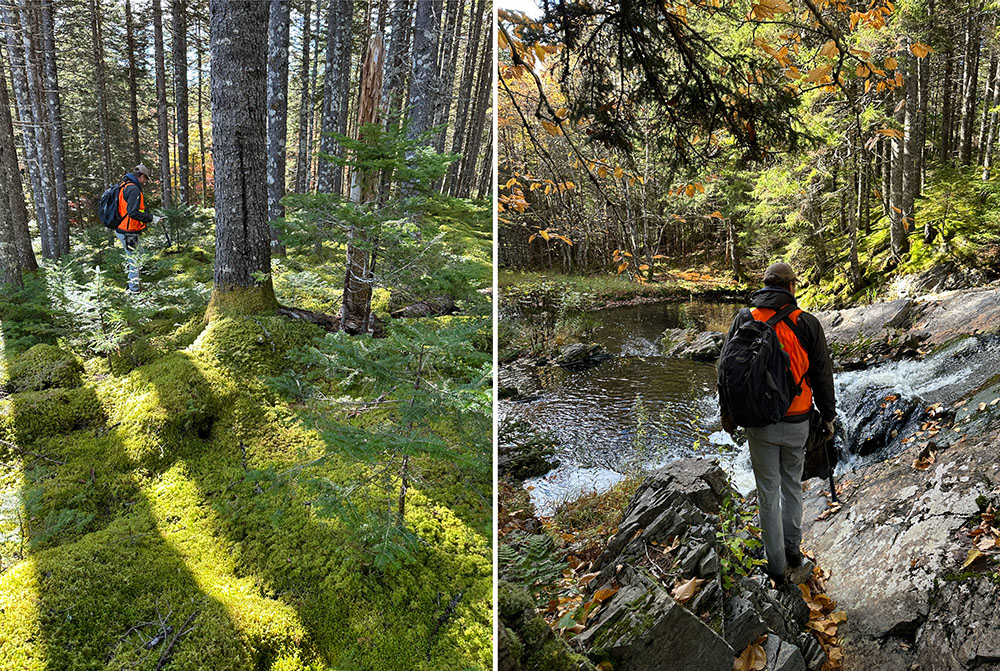
Using the information provided by Peter Wallace and others, we drove to the location on the northern boundary of the Cliffs of Fundy Global Geopark. The fall colours were vivid in the sunshine, and we were glad to not be on the Bay of Fundy shoreline. The wind was howling and sending ferocious waves pounded against the dramatic cliffs. High in the Economy Wilderness Area, the thick old forests sheltered us from the wind.
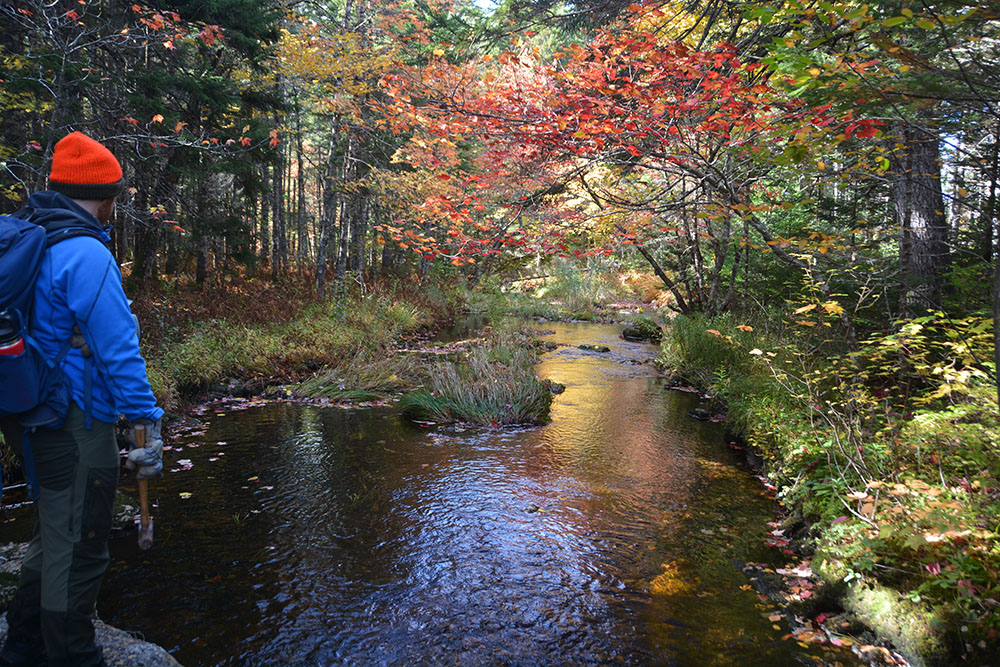
We walked down a brook, stepping carefully on the rocks in the water, and through deer paths along the moss covered ground. This is clearly an old and mature forest. It was a very special place to spend the day. The vibrant green carpet of moss provided a dramatic contrast to the bright red and yellow colours of the leaves. We enjoyed a short break eating lunch while admiring a beautiful waterfall, then had our great success.
Ancient Forests
Among the rocks along the banks of the brook, we finally found one of the fossil sites discovered in 1977. Among the rocks scattered below the moss-covered cliff, we found a block packed with 400-million-year-old plants. Some of these new fossils are exceptionally well preserved.
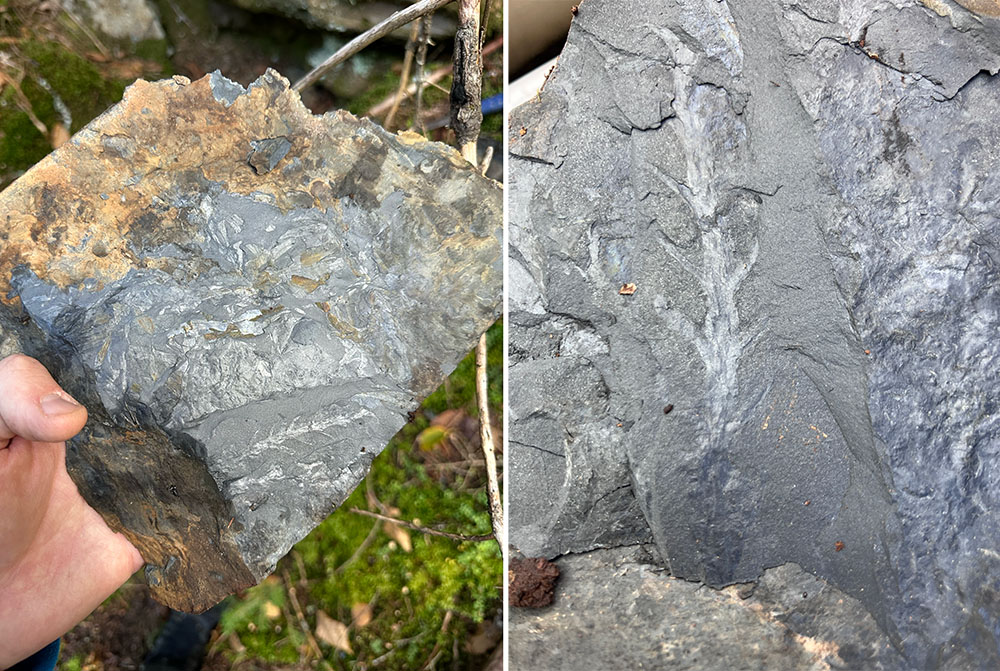
We documented the fossil locality and decided to call it a day and make our way back to the vehicle. The afternoon had been an enormous success, and we clearly appreciated the geodiversity on our doorstep. We had collected a new large sample of the Devonian plants which will be added to the Museum for future study.
Geoheritage and Geodiversity
We benefited from the previous work of geologists who had mapped this area of the geopark fifty years ago. They had collected some initial fossil samples. Now we joined them in wanting to learn more about this fossil plant, Psilophyton, which William Dawson described for the first time in 1859. We could not help but feel the presence of this rich geoheritage as we walked down a beautiful mountain brook.
The water, flowing down the mountain brook, moves across an incredibly diverse geology. The water, slowly cuts into the hard bedrock, and travels across some of the oldest rocks of the geopark. The brook exposes the secrets of this ancient fossil site. Today, the modern forest and its thick moss carpet draw nutrients from the waters of this babbling brook. The tall trees send their roots down to wrap around and anchor among the rocks containing 400 million years old plant fossils. The great chain of life laid bare, from rocks to towering canopy above.
This is a place of wonder and rich geodiversity, a special place in the Cliffs of Fundy UNESCO Global Geopark. A great place to spend International Geodiversity Day.
Leave a Reply